
As artificial intelligence becomes deeply embedded in software development workflows, leaders are increasingly asking a critical question: How do we measure the real impact of AI coding tools? From code assistants to automated testing platforms, AI-powered solutions promise faster delivery, improved quality, and reduced costs. However, without proper measurement frameworks and tools, these promises remain difficult to validate.
TLDR: Leaders can measure the impact of AI coding tools by combining productivity analytics, quality metrics, developer experience surveys, financial tracking, and DevOps dashboards. Tools such as version control analytics, CI/CD monitors, issue trackers, and value stream management platforms provide data-driven insights. The most effective approach blends quantitative metrics like deployment frequency and defect rates with qualitative developer feedback. Impact measurement works best when tied directly to business goals.
Modern leadership requires more than intuition; it demands data-informed decisions. Measuring AI’s impact in development environments ensures that investments deliver tangible returns instead of novelty-driven adoption.
Why Measuring AI Impact Matters
AI coding tools can influence nearly every stage of software development. Leaders who fail to measure their impact risk overestimating gains or overlooking hidden costs. Proper measurement allows organizations to:
- Validate return on investment (ROI)
- Identify productivity gains or bottlenecks
- Monitor software quality impacts
- Understand developer satisfaction levels
- Make strategic scaling decisions
Without structured tracking, leaders may rely on anecdotal reports. While developers might report feeling more productive, only structured analytics confirm whether throughput, defect rates, or deployment speed actually improved.
1. Productivity Measurement Tools
One of the primary promises of AI coding tools is enhanced productivity. Measuring this requires more nuance than simply counting lines of code.
Version control analytics platforms such as Git-based dashboards enable leaders to measure:
- Commit frequency
- Pull request cycle time
- Time to merge
- Code churn rates
These tools provide objective indicators of workflow acceleration. For example, a reduction in pull request review time following AI adoption may indicate cleaner or more standardized code submissions.
Value Stream Management (VSM) tools offer broader productivity visibility. They track work from ideation to deployment, highlighting whether AI tools reduce handoff delays or improve feature delivery speed.
Leaders should focus not only on output volume but also on flow efficiency. Faster coding that creates more rework does not represent true productivity gains.
2. Quality and Reliability Tracking Systems
AI-generated code can introduce both efficiencies and risks. Measuring software quality impact is therefore essential.
Static code analysis tools help detect code smells, vulnerabilities, or architectural weaknesses. Comparing metrics before and after AI implementation can reveal shifts in quality patterns.
Key quality indicators include:
- Defect density
- Escaped defects in production
- Mean time to resolution (MTTR)
- Test coverage percentages
Automated testing platforms also provide measurable insight. If AI assists in writing unit tests, leaders should track whether test coverage expands and whether regression rates decline.
Security monitoring platforms are particularly important. AI-generated code may sometimes replicate insecure patterns found in training data. Monitoring vulnerability scan results helps evaluate risk exposure.
3. DevOps Performance Metrics
DevOps metrics offer one of the clearest frameworks for measuring impact. The widely recognized DORA metrics include:
- Deployment frequency
- Lead time for changes
- Change failure rate
- Mean time to recovery
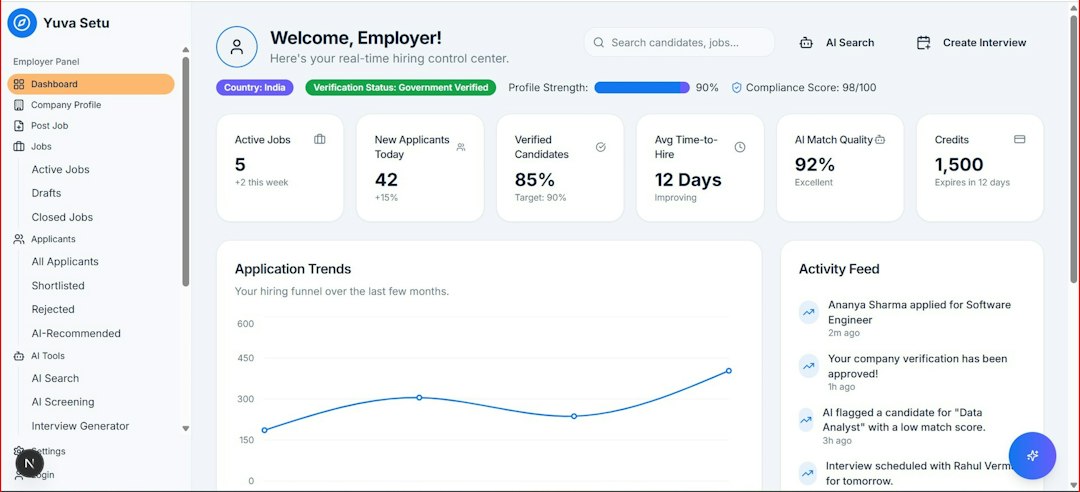
When AI coding tools are effective, leaders often observe shorter lead times and higher deployment frequency without increases in failure rates. DevOps dashboards and CI/CD monitoring tools make these metrics visible in real time.
Importantly, leaders should compare long-term patterns rather than short-term spikes. Early improvements might reflect learning curves rather than sustained impact.
4. Developer Experience and Sentiment Tools
Quantitative metrics only tell part of the story. Developer experience (DX) significantly influences team performance.
Pulse surveys and developer experience platforms allow leaders to gather structured feedback. Questions might explore:
- Perceived productivity changes
- Confidence in AI-generated code
- Impact on cognitive load
- Time spent reviewing AI suggestions
Leaders should analyze trends over time, not just single survey snapshots. An increase in satisfaction paired with lower burnout signals healthy AI integration.
Additionally, collaboration tools and meeting analytics can help determine whether AI reduces reliance on repetitive coordination meetings or documentation burden.
5. Financial and Cost Tracking Platforms
Ultimately, leaders must connect operational impact to business value.
Financial dashboards and cost allocation tools help measure:
- Licensing costs of AI tools
- Infrastructure expenses (compute usage)
- Labor cost savings
- Revenue acceleration from faster releases

A balanced ROI formula might include:
- Cost savings from automation
- Reduction in debugging hours
- Faster feature monetization
- Risk mitigation value
Leaders should avoid evaluating AI tools solely on subscription price. Long-term value often emerges through improved team velocity or retention.
6. Governance and Compliance Monitoring
Organizations operating in regulated environments must assess compliance implications. Governance tools that track code provenance and documentation completeness become essential when AI contributes to codebases.
Tools that log AI-generated suggestions and maintain audit trails ensure:
- Transparency in authorship
- Compliance with internal policies
- Traceability for legal reviews
Regulatory audits may require clarity about how code was generated. Leaders who proactively implement monitoring safeguards minimize long-term legal risks.
Best Practices for Leaders
While tools provide measurement capability, strategic implementation determines success.
Effective leaders typically:
- Define clear objectives before adoption
- Establish baseline metrics prior to rollout
- Run pilot programs before scaling
- Combine quantitative and qualitative data
- Review results quarterly
Equally important is transparency. Developers must understand that measurement serves improvement, not surveillance. A culture of trust encourages honest feedback and more accurate insights.
Common Pitfalls in Measuring AI Impact
Leaders sometimes encounter measurement challenges. Common pitfalls include:
- Overemphasizing lines of code as a productivity metric
- Ignoring quality tradeoffs
- Failing to establish pre-AI benchmarks
- Measuring too soon after implementation
- Neglecting human factors
AI tools can increase output volume without necessarily enhancing strategic value. Measurement must align with broader organizational goals such as customer satisfaction or revenue growth.
Creating a Balanced Impact Scorecard
Many organizations benefit from building a custom AI Impact Scorecard. This dashboard aggregates metrics across key domains:
- Productivity
- Quality
- DevOps performance
- Developer experience
- Financial impact
- Risk and compliance
By visualizing performance in one centralized view, leadership teams can track progress consistently. Over time, this structured approach turns AI adoption from experimentation into strategic transformation.
Conclusion
Measuring the impact of AI coding tools requires more than adopting a single analytics dashboard. It demands a comprehensive framework that blends productivity tracking, code quality analytics, DevOps metrics, developer sentiment analysis, financial ROI evaluation, and governance oversight.
When leaders integrate these tools thoughtfully and align them with strategic goals, AI coding tools transition from experimental enhancements to measurable performance drivers. Proper measurement transforms AI from a promise into a proven asset within modern software development ecosystems.
Frequently Asked Questions (FAQ)
1. What is the most important metric to track when evaluating AI coding tools?
No single metric is sufficient. Leaders should prioritize a combination of DORA metrics, defect rates, and developer satisfaction scores to gain a holistic understanding.
2. How long should organizations measure before evaluating results?
Most teams should measure at least one to two quarters after full adoption to account for learning curves and integration adjustments.
3. Can AI coding tools negatively impact quality?
Yes. Without monitoring, AI may introduce vulnerabilities or inconsistencies. Continuous code scanning and defect tracking are essential safeguards.
4. How can leaders calculate ROI for AI coding tools?
ROI calculations should include licensing costs, infrastructure expenses, labor savings, faster time to market, and risk mitigation benefits.
5. Should AI usage be mandatory or optional for developers?
This depends on organizational culture. Many leaders start with optional adoption and scale usage based on measurable results and developer feedback.
6. What is the biggest mistake leaders make when measuring AI impact?
The most common mistake is failing to establish baseline metrics before adoption, making it difficult to quantify improvement accurately.