

Building a professional website is one of the first and most important investments a startup will make. Yet for founders operating on limited budgets, hiring a development agency or custom-coding a website is often unrealistic. Fortunately, modern website builders offer cost-effective solutions that combine ease of use, scalability, and professional design—without draining early-stage capital. Choosing the right platform, however, requires careful comparison of pricing, features, and long-term flexibility.
TLDR: Startups can launch professional websites at low cost using modern website builders that offer templates, hosting, and built-in marketing tools. Wix, Squarespace, Shopify, Webflow, and WordPress.com stand out for affordability and scalability. The best choice depends on whether you prioritize ecommerce, customization, design simplicity, or long-term growth. Comparing pricing tiers and transaction fees is critical before committing.
Below is a practical and serious evaluation of the most affordable website builders for startups, including their strengths, limitations, and ideal use cases.
What Startups Should Look for in an Affordable Website Builder
Price alone should not define “affordability.” A truly cost-effective platform balances monthly fees with functionality, scalability, and hidden costs.
Key evaluation criteria include:
- Monthly subscription cost and renewal pricing
- Transaction fees for ecommerce businesses
- Hosting and security inclusion
- Template quality and mobile responsiveness
- SEO and marketing tools
- Ease of use for non-technical founders
- Scalability as the company grows
A low sticker price can be misleading if essential features are locked behind higher-priced tiers. Startups should assess both short-term savings and long-term flexibility.
1. Wix – Best for Budget-Friendly Flexibility
Wix is widely considered one of the most accessible website builders for startups. Its intuitive drag-and-drop interface makes it possible to design a professional website without coding knowledge.
Starting price: Typically lower-tier plans are competitively priced for small businesses.
Best for: Service providers, freelancers, small ecommerce startups
Advantages:
- Large template library
- Beginner-friendly editor
- Built-in SEO tools
- App marketplace for extended functionality
Limitations:
- Template switching after publishing is restricted
- Advanced scalability can be limited compared to developer-focused platforms
Wix is particularly suitable for startups seeking fast deployment and predictable upfront costs.
2. Squarespace – Best for Polished Brand Presentation
Squarespace has built a reputation for elegant, design-forward templates. For startups focused heavily on visual branding—such as creative agencies, DTC brands, or consultants—Squarespace offers professional design with minimal effort.
Starting price: Slightly higher than entry-level competitors but includes strong core features.
Best for: Creative businesses, personal brands, boutique ecommerce
Advantages:
- High-quality mobile-optimized templates
- Integrated ecommerce tools
- Built-in analytics and email campaigns
- Secure hosting included
Limitations:
- Less design flexibility than fully customizable platforms
- Transaction fees on some lower plans
While not always the absolute cheapest option, Squarespace delivers strong value considering its professional-grade aesthetics and included services.
3. Shopify – Best Affordable Option for Ecommerce Startups
For startups launching an online store, Shopify remains one of the most cost-effective ecommerce-specific solutions. While its monthly subscription may appear higher than general website builders, its built-in commerce infrastructure often reduces the need for third-party integrations.
Starting price: Entry ecommerce tier with scalable plans.
Best for: Product-based startups and online retailers
Advantages:
- Robust inventory management
- Secure payment gateways
- Scalable infrastructure
- Extensive app ecosystem
Limitations:
- Additional app costs can accumulate
- Transaction fees if not using native payment processing
For startups serious about ecommerce growth, Shopify often becomes more economical over time compared to trying to retrofit general-purpose builders with shopping features.
4. WordPress.com – Best for Content-Driven Startups
WordPress.com offers a simplified, hosted version of WordPress, making it more accessible than the self-hosted WordPress.org alternative. It works particularly well for startups relying on blogging, content marketing, or editorial strategies.
Starting price: Free tier available with paid upgrades.
Best for: Media startups, SaaS blogs, content-heavy businesses
Advantages:
- Strong SEO foundation
- Flexible content management
- Large theme library
- Upgrade path to advanced customization
Limitations:
- Advanced plugins require higher plans
- Customization may require technical familiarity
Startups prioritizing inbound marketing often find WordPress.com to be one of the most cost-efficient long-term investments.
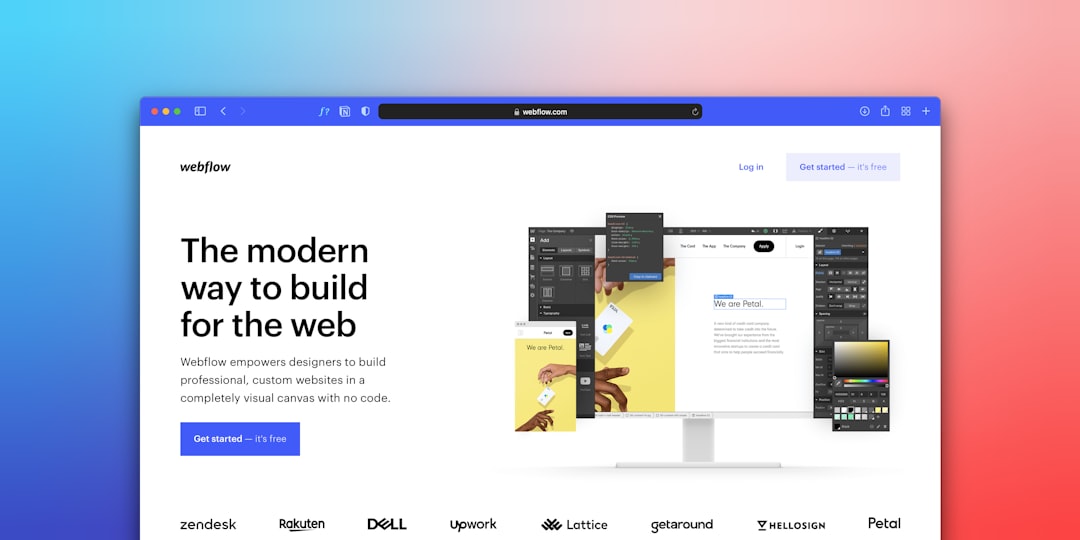
5. Webflow – Best for Design Control on a Budget
Webflow bridges the gap between drag-and-drop simplicity and developer-level customization. While slightly more complex than Wix or Squarespace, it offers startups more granular control without hiring full-time developers.
Starting price: Competitive for static sites; ecommerce plans higher.
Best for: Tech startups, SaaS founders, design-focused teams
Advantages:
- Clean code export
- Highly customizable interactions
- Professional CMS features
Limitations:
- Learning curve for beginners
- Pricing structure can be complex
For startups anticipating growth and needing design flexibility without full custom development costs, Webflow presents a balanced solution.

Comparison Chart: Affordable Website Builders for Startups
| Platform | Starting Cost Level | Best For | Ecommerce Support | Ease of Use | Scalability |
|---|---|---|---|---|---|
| Wix | Low | General small startups | Yes | Very Easy | Moderate |
| Squarespace | Low to Moderate | Brand-focused businesses | Yes | Easy | Moderate |
| Shopify | Moderate | Ecommerce startups | Excellent | Easy | High |
| WordPress.com | Very Low to Moderate | Content-driven startups | Available on higher tiers | Moderate | High |
| Webflow | Moderate | Tech & SaaS startups | Yes | Moderate | High |
Hidden Costs Startups Must Consider
Even affordable builders may generate additional expenses. Founders should account for:
- Custom domain registration
- Premium templates
- Third-party applications
- Email marketing integration
- Payment processing fees
Carefully reviewing pricing breakdowns ensures a platform remains affordable beyond the introductory offer.
How to Choose the Right Builder for Your Startup
Making the correct decision depends less on absolute price and more on business model alignment.
- If you are launching a service-based startup, simplicity and speed (Wix or Squarespace) may be ideal.
- If your focus is physical or digital product sales, Shopify is typically the most practical long-term solution.
- If your strategy centers on content marketing and SEO, WordPress.com offers superior publishing tools.
- If design precision and future flexibility are priorities, Webflow may justify the learning curve.
Founders should also project 12–24 months ahead. Migrating platforms later can carry operational disruptions and additional expense.
Final Thoughts
Affordable website builders have matured into powerful business tools capable of supporting serious startup growth. The key is not simply minimizing monthly expenses but choosing a platform that delivers operational value while accommodating expansion.
A well-selected builder enables startups to:
- Launch faster
- Reduce upfront development costs
- Maintain control over branding
- Scale as revenue increases
By evaluating pricing structures, feature sets, and long-term compatibility, startups can secure a digital foundation that is both economical and sustainable. In today’s competitive environment, a reliable and affordable website builder is not just a convenience—it is essential infrastructure.