
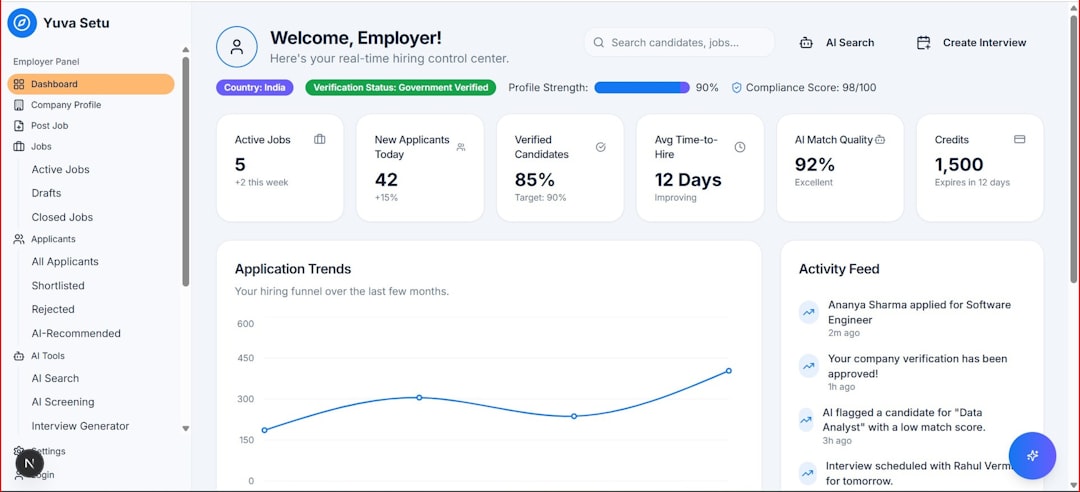
In today’s competitive job market, finding and retaining top talent requires more than posting vacancies and reviewing resumes. Modern organizations rely on powerful HR recruitment software to streamline hiring, improve candidate experience, and make smarter workforce decisions. From applicant tracking systems to AI-driven talent analytics, these tools have transformed how HR teams operate.
TLDR: HR recruitment software helps businesses automate hiring, manage candidate pipelines, and improve talent retention. The best platforms combine applicant tracking, onboarding, analytics, and communication tools in one system. In this article, we explore eight powerful HR recruitment software solutions and highlight what makes each one stand out. Choosing the right tool depends on your company size, hiring goals, and long-term talent strategy.
Below are eight leading HR recruitment software platforms that can help your organization hire faster and manage talent more effectively.
1. Workday Recruiting
Best for: Large enterprises seeking a full-service HR suite.
Workday Recruiting is part of the broader Workday Human Capital Management (HCM) system. It offers a unified platform that connects recruitment with payroll, performance management, and workforce planning.
- Integrated talent management: Seamlessly connects hiring with employee lifecycle tracking.
- Advanced analytics: Real-time dashboards and hiring performance metrics.
- Mobile optimized: Enables recruiters and candidates to interact on any device.
Organizations that need deep reporting capabilities and enterprise-level scalability often turn to Workday for its robust infrastructure and automation.
2. BambooHR
Best for: Small to mid-sized businesses looking for simplicity and ease of use.
BambooHR is known for its intuitive interface and user-friendly setup. While it offers full HR management features, its applicant tracking system (ATS) is particularly appealing to growing businesses that want efficient hiring without technical complexity.
- Easy job posting: Deliver listings to multiple job boards instantly.
- Candidate tracking: Organized pipeline management.
- Onboarding tools: Digital paperwork and automated workflows.
The platform reduces administrative burdens and allows HR teams to focus on building meaningful relationships with candidates.
3. Greenhouse
Best for: Structured hiring and diversity-focused recruitment.
Greenhouse is widely respected for its structured hiring methodology. It helps businesses standardize interview processes and reduce bias through data-driven decision-making.
- Interview kits: Predefined evaluation templates.
- Diversity and inclusion tools: Track DEI metrics throughout recruitment.
- Custom workflows: Configure stages based on role requirements.
Companies prioritizing fair hiring practices and collaborative recruitment processes often integrate Greenhouse into their HR stack.
4. Lever
Best for: Candidate relationship management (CRM) and collaborative hiring.
Lever combines ATS functionality with CRM capabilities, making it ideal for companies that proactively nurture talent pipelines.
- Talent nurturing: Maintain engagement with passive candidates.
- Automated communications: Personalized outreach at scale.
- Collaborative evaluation: Hiring teams can share notes and feedback easily.
This software shines in environments where long-term talent engagement is just as important as immediate hiring.

5. SmartRecruiters
Best for: Organizations with global hiring needs.
SmartRecruiters offers an end-to-end talent acquisition suite that supports international recruitment. Its modern interface and AI-powered tools help recruiters source and hire more efficiently.
- Global job distribution: Post openings internationally with ease.
- AI matching: Suggests best-fit candidates automatically.
- Offer management: Streamlined approvals and digital signing.
The platform is particularly useful for expanding companies managing multiple offices or remote teams across regions.
6. iCIMS Talent Cloud
Best for: High-volume recruitment and enterprise-level customization.
iCIMS Talent Cloud provides a scalable ecosystem for sourcing, recruiting, onboarding, and engaging employees. It integrates with numerous third-party HR tools, offering flexibility to organizations with complex needs.
- AI-powered sourcing: Discover qualified candidates faster.
- Text recruiting: Reach applicants via mobile messaging.
- Robust integrations: Connect with payroll, background checks, and HRIS systems.
Large enterprises and fast-growing organizations often benefit from iCIMS due to its adaptability and feature-rich design.
7. Zoho Recruit
Best for: Staffing agencies and budget-conscious businesses.
Zoho Recruit offers both agency and corporate HR solutions. Its affordability and customization options make it attractive for small organizations and recruiting firms.
- Resume parsing: Automatically extract candidate details.
- Client portal: Ideal for staffing agencies managing multiple clients.
- Workflow automation: Custom triggers for candidate movement.
With strong flexibility and pricing options, Zoho Recruit delivers practical value without sacrificing essential capabilities.
8. ADP Workforce Now
Best for: Companies seeking recruitment integrated with payroll and compliance.
ADP Workforce Now is a comprehensive HR platform that connects talent acquisition with payroll processing and compliance management.
- Compliance tracking: Stay aligned with labor regulations.
- Seamless onboarding: Sync candidate information directly into payroll.
- Data security: Enterprise-grade privacy protections.
For organizations that want recruitment and administrative HR processes housed under one umbrella, ADP provides a unified solution.
Key Features to Look for in HR Recruitment Software
While each platform offers unique advantages, there are several features every business should evaluate before making a decision:
- Applicant Tracking System (ATS): Organizes resumes and manages hiring stages.
- Automation: Reduces repetitive tasks like interview scheduling.
- Analytics and reporting: Measures time-to-hire and source effectiveness.
- Candidate experience tools: Mobile optimization and communication features.
- Integration capabilities: Connects seamlessly with payroll or HR management systems.
Identifying your company’s immediate hiring needs and long-term talent goals will help narrow your choices.
Benefits of Using HR Recruitment Software
Investing in HR recruitment technology offers advantages that extend beyond simply filling vacant positions:
- Improved hiring speed: Automation accelerates every stage of recruitment.
- Better candidate quality: AI matching identifies stronger fits.
- Stronger employer branding: Professional communication tools elevate the candidate experience.
- Data-driven decisions: Insights help refine recruitment strategies.
- Enhanced retention: Effective onboarding leads to higher employee satisfaction.
Ultimately, recruitment software transforms hiring from a reactive process into a strategic advantage.
Final Thoughts
The right HR recruitment software can dramatically enhance how organizations attract, hire, and retain talent. Whether you’re a rapidly growing startup or a global enterprise, investing in the right technology ensures your hiring processes remain efficient, compliant, and candidate-friendly.
Before making your final decision, consider scheduling product demos, reviewing integration compatibility, and involving your HR team in the evaluation process. With the right system in place, recruitment becomes less about paperwork and more about building a workforce that drives long-term success.