

Artificial intelligence is changing how insurers manage claims, but its performance depends heavily on the quality of the visual data used to train it. In claims automation, insurance image annotation turns photos of damaged vehicles, homes, commercial property, medical documents, and inspection evidence into structured data that machine learning models can understand. Done correctly, it helps insurers accelerate decisions, reduce manual workload, and improve consistency without compromising accuracy or compliance.
TLDR: Insurance image annotation is the process of labeling visual claim evidence so AI systems can detect damage, estimate severity, and support faster claims decisions. For example, an auto insurer using well-annotated vehicle damage datasets may reduce initial claim triage time from several days to under 24 hours. Best results come from clear labeling standards, expert review, data security, and continuous quality monitoring. Poor annotation, however, can lead to inaccurate payouts, customer disputes, and regulatory risk.
Why Image Annotation Matters in Claims Automation
Insurance claims often begin with images: a photo of a dented bumper, a flooded basement, a cracked windshield, a damaged roof, or a medical scan. AI models can analyze these images at scale, but only after they have been trained on examples where relevant features are accurately labeled. Annotation provides that training foundation.
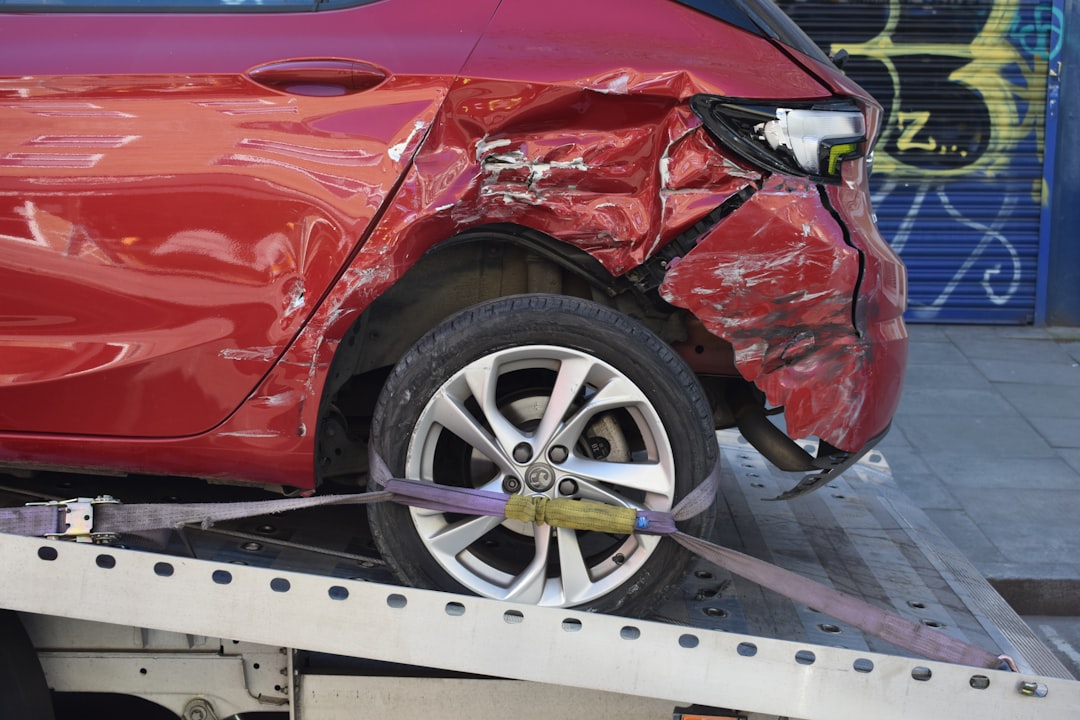
In practical terms, annotation may identify damage type, damage location, severity level, claim object, and supporting context. In auto insurance, this could mean drawing bounding boxes around scratches, dents, broken lights, deployed airbags, or misaligned panels. In property insurance, it may involve segmenting roof damage, water intrusion, mold, fire marks, or structural cracks.
When annotation is precise and consistent, AI systems can support tasks such as:
- Automated first notice of loss triage
- Damage detection and classification
- Repair cost estimation support
- Fraud signal identification
- Claim prioritization based on severity
- Adjuster workflow recommendations
Common Annotation Types Used in Insurance
Different claims automation use cases require different annotation methods. Selecting the right technique is essential because the annotation format directly affects model behavior.
- Bounding boxes: Used to mark objects or damaged areas, such as a broken window, dented car door, or roof section.
- Polygon annotation: Useful for irregular damage shapes, including hail impact zones, fire damage, or water stains.
- Semantic segmentation: Assigns every relevant pixel to a category, offering high precision for complex property and vehicle damage analysis.
- Keypoint annotation: Often used to identify structural points on vehicles or buildings, helping detect deformation or misalignment.
- Classification labels: Applied at the image level to categorize severity, claim type, or whether damage is present.
- Text annotation and OCR validation: Used for claim forms, invoices, repair estimates, medical records, and policy documents.
For simple triage, bounding boxes and classification may be sufficient. For more advanced automated estimation, insurers often need segmentation and expert-level severity labels.
Best Practices for High-Quality Insurance Image Annotation
1. Define Clear Labeling Guidelines
Annotation quality begins with documentation. Every project should have a detailed labeling guide that explains what to label, what not to label, how to handle ambiguous cases, and how severity levels should be interpreted.
For example, if annotators are labeling vehicle dents, the guide should distinguish between minor cosmetic dents, moderate panel deformation, and severe structural damage. Without these standards, different annotators may label the same image differently, creating noisy training data.
2. Involve Domain Experts Early
Insurance image annotation is not just a technical task. It requires industry knowledge. Auto repair specialists, property adjusters, medical claims reviewers, and fraud investigators can help define categories that reflect real claims workflows.
This is especially important for severity scoring. A small crack in a windshield may be low severity in one context but high priority if it obstructs the driver’s field of view. Similarly, roof discoloration may be harmless shading or evidence of storm damage. Expert input reduces these errors before they enter the model.
3. Use Representative and Diverse Datasets
AI systems must perform reliably across real-world conditions. Training data should include variation in lighting, angles, image quality, weather, device type, geography, vehicle models, building materials, and damage patterns.
A model trained only on clear, well-lit photos may fail when customers submit dark garage images or low-resolution mobile photos. A property model trained mainly on suburban roofs may underperform on commercial buildings or older structures. Dataset diversity is essential for fair and dependable automation.

4. Establish Multi-Level Quality Control
Quality assurance should not be optional. Insurers should use a structured review process that includes automated checks, peer review, and expert validation. Common quality control measures include:
- Consensus review: Multiple annotators label the same image, and differences are resolved by a reviewer.
- Gold standard tasks: Known-answer images are inserted to measure annotator accuracy.
- Spot audits: Supervisors randomly inspect completed annotations.
- Inter-annotator agreement tracking: Teams measure how consistently annotators apply the same labels.
- Model feedback loops: Misclassified claims are reviewed and added back into training datasets.
For high-stakes use cases, such as payout recommendations or fraud escalation, insurers should set stricter accuracy thresholds and require expert review of edge cases.
5. Protect Sensitive Customer Data
Claims images may contain personally identifiable information, license plates, faces, addresses, medical details, financial documents, or location metadata. Annotation workflows must therefore follow strong data governance standards.
Best practices include data minimization, secure file transfer, role-based access, encryption, audit logs, and redaction of unnecessary personal details. If third-party annotation providers are used, insurers should verify compliance with relevant privacy and security requirements, such as GDPR, SOC 2, HIPAA where applicable, and local insurance regulations.
6. Label for Business Outcomes, Not Just Objects
One common mistake is focusing only on visual objects while ignoring the claim decision the AI must support. For example, labeling “scratch” and “dent” is useful, but claims automation may also need labels such as repairable, replace part, requires adjuster review, or possible prior damage.
Annotation schemas should be aligned with operational goals. If the goal is faster triage, labels should support routing and prioritization. If the goal is estimation, labels should support part identification, material type, labor complexity, and severity. If the goal is fraud detection, labels may need to capture inconsistencies between image evidence, timestamps, metadata, and reported incident details.
Challenges Insurers Should Anticipate
Even mature organizations face challenges when building annotated datasets. Damage can be subjective, photos may be incomplete, and claim evidence often changes over time. A vehicle may be photographed after temporary repairs, or property damage may worsen days after a storm. In addition, similar visual patterns can have different causes. Water stains, for instance, may result from plumbing failure, roof leakage, condensation, or flood exposure.
Another challenge is model drift. As repair costs, vehicle designs, building materials, climate patterns, and fraud tactics change, older training data may become less reliable. Continuous monitoring and dataset updates are necessary to keep AI systems relevant.
Building a Reliable Annotation Workflow
A strong workflow typically begins with claim image collection and data classification. Sensitive information is removed or controlled, then images are assigned to trained annotators using standardized guidelines. Completed labels are reviewed, errors are corrected, and validated data is passed to data science teams for model training.
After deployment, insurers should compare AI outputs against adjuster decisions, repair invoices, customer appeals, and final settlement outcomes. This creates a valuable feedback loop. For instance, if a model consistently underestimates rear bumper damage on certain vehicle types, those examples should be re-annotated and added to future training cycles.

The Role of Human Oversight
AI claims automation should support professionals, not remove accountability. Human oversight remains essential for complex, high-value, disputed, or unusual claims. The most effective systems combine machine speed with expert judgment.
In this model, AI can handle repetitive visual analysis and recommend next steps, while adjusters focus on interpretation, negotiation, exceptions, and customer communication. This improves efficiency while preserving fairness and trust.
Conclusion
Insurance image annotation is a critical foundation for dependable AI claims automation. The quality of labels determines whether models can accurately detect damage, assess severity, and support fair claims decisions. Insurers that invest in clear guidelines, domain expertise, diverse datasets, rigorous quality control, and secure data governance are more likely to achieve reliable automation outcomes.
As claims volumes rise and customers expect faster service, well-annotated image data can become a strategic advantage. However, the goal should not be automation at any cost. The goal should be faster, more consistent, and more transparent claims handling supported by AI systems that are trained responsibly and supervised carefully.