

For over a decade, Google Maps has been the dominant force in the world of digital navigation. Most smartphone users rely on it daily for directions, traffic updates, or exploring new places. However, a growing number of alternative navigation apps are stepping up their game, offering features and sometimes even improved accuracy that challenge Google’s supremacy. In this article, we will compare the accuracy of Google Maps with top alternatives such as Apple Maps, Waze, HERE WeGo, and OpenStreetMap, highlighting their pros and cons, the technology behind their functionalities, and real-world performance.
Understanding Accuracy in Navigation Apps
Accuracy in navigation tools depends on several factors, from real-time GPS signal strength to the quality of traffic data and speed of updates. A reliable map app should offer:
- Precise geolocation via GPS and satellite data
- Accurate traffic prediction to avoid congestion
- Updated map data reflecting construction, closures, or new routes
- Reliable estimated times of arrival (ETA)
Let’s take a look at how the major players measure up.
Google Maps: The Benchmark
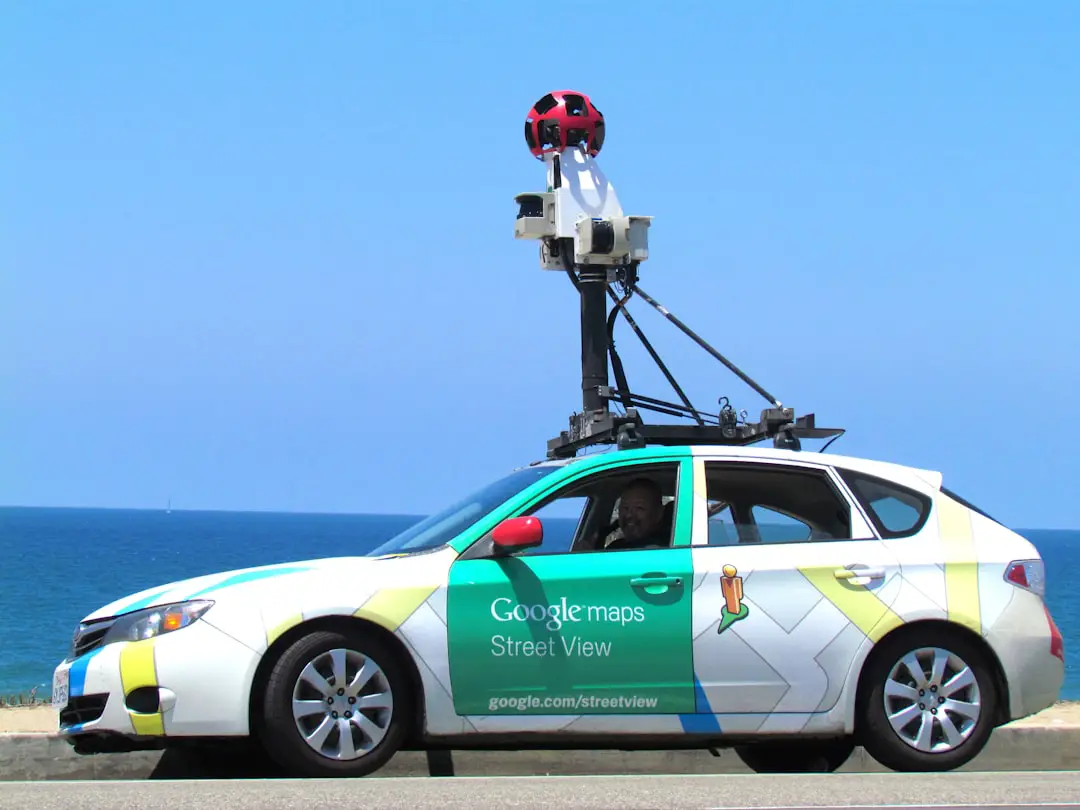
Backed by years of data collection and user contributions, Google Maps continues to be a leader in navigational accuracy. It uses data from satellites, street-level imagery, business listings, crowdsourcing, and its own mapping vehicles to stay current. Google’s estimation of ETAs is generally dependable, thanks to its integration with live traffic data from Android users around the globe.
A unique strength of Google Maps is its ability to suggest alternate routes in real time when traffic conditions change, maintaining both route speed and safety. Moreover, it excels in features such as indoor mapping of large venues, bike lane identification, and public transport integration in many global cities.
Apple Maps: Closing the Gap
Once criticized for its inaccuracy at launch, Apple Maps has made significant improvements. Apple has rebuilt the app from the ground up in recent years, deploying its own mapping fleets and using satellite imagery to generate richer, more precise maps.
Apple Maps has improved dramatically in the United States, where it now often equals or surpasses Google Maps in accuracy, particularly in iOS-integrated features like Quick Look previews and real-time transit data. The introduction of Look Around offers a cleaner visual experience than Google’s Street View, though it’s available in fewer locations.
Accuracy for routes in less urbanized or international regions may still lag behind Google. However, Apple’s focus on user privacy and system integration makes it a strong alternative, especially for iPhone users.
Waze: The Social Navigator
Waze, also owned by Google, takes a different approach. It relies heavily on crowdsourced reports from drivers for incidents like accidents, police presence, and road closures. This makes Waze highly effective for real-time navigation in busy or unpredictable traffic scenarios.
Waze’s routing algorithm prioritizes speed over simplicity, often suggesting unconventional routes to shave off a few minutes. While this can be efficient, it also introduces some trade-offs when it comes to reliability or legality of the chosen paths (e.g. directing through private roads or tricky turns).
Its map data is constantly updated with input from its active community. In dense urban environments, Waze can sometimes outperform both Google Maps and Apple Maps in predicting more accurate ETAs.

HERE WeGo: Precision from the Auto Industry
Developed originally by Nokia and now backed by a consortium of automotive companies, HERE WeGo is particularly accurate in European cities where it receives extensive support. Major automakers like BMW, Audi, and Mercedes integrate HERE maps into their infotainment systems, signaling high reliability standards.
HERE excels in offline navigation — a significant advantage for travelers. Users can download entire countries for offline access with full routing capabilities. Unlike Waze or Apple Maps, HERE also offers a broader set of transport options in international cities.
However, in less-developed regions or remote areas, update cycles may be slower than Google’s user-driven model. But for offline accuracy and data privacy, HERE is a solid competitor.
OpenStreetMap: Community-Driven Accuracy
OpenStreetMap (OSM) offers editable maps, created and maintained by a global community of volunteers. This open-source model allows users to fix errors, add new roads, and edit landmarks faster than proprietary platforms.
In areas where local contributors are active, OpenStreetMap’s accuracy can rival — or even surpass — Google Maps. It’s especially valuable in developing countries or regions underrepresented in commercial mapping tools.
The main drawback lies in inconsistency: OSM’s performance varies widely depending on community contributions and lacks official support for commercial-grade routing without third-party apps.
Real-World Accuracy Comparison
Several independent reviews and academic studies compare navigation apps in categories like route accuracy, ETA prediction, and map completeness. The findings vary by region, but general trends show:
- In urban areas, Google Maps and Waze usually offer the most accurate ETAs and route suggestions.
- In suburban and rural zones, Apple Maps has improved drastically but still occasionally misdirects.
- In unfamiliar international zones, HERE WeGo and OpenStreetMap provide strong offline support and detailed data where others fall short.
Google Maps benefits from data monopolies (e.g. Google Search, Wi-Fi data, and Android feedback), giving it a broader perspective on driver behavior. However, alternatives are not to be underestimated, with several apps excelling in specific niches.
Conclusion
No single app dominates in every category of navigational accuracy. Though Google Maps remains the most well-rounded and widely adopted, apps like Waze offer superior traffic detection, and Apple Maps has dramatically improved where iOS is prevalent.
For travelers, HERE WeGo offers unrivaled offline capabilities, while OpenStreetMap empowers local mapping efforts critical to underserved regions. The best navigation experience may come from using a combination of these tools based on context — urban travel, international trips, or off-the-grid exploration.

FAQ: Comparing Google Maps vs. Alternatives
- Q: Which map app gives the most accurate real-time traffic updates?
A: Waze is praised for its real-time user-generated traffic alerts, making it the best for dynamic traffic updates. - Q: Is Google Maps good outside of the United States?
A: Yes, but performance varies. In countries with strong Android use and data coverage, Google Maps generally performs very well. - Q: Can I use Apple Maps on Android?
A: No, Apple Maps is only available on Apple devices like the iPhone, iPad, and Mac. - Q: Which app is best for offline navigation?
A: HERE WeGo offers comprehensive offline maps, ideal for travelers without constant internet access. - Q: Is OpenStreetMap reliable for driving directions?
A: In supported areas with active editing communities, yes. However, reliability can be inconsistent in less active regions.