
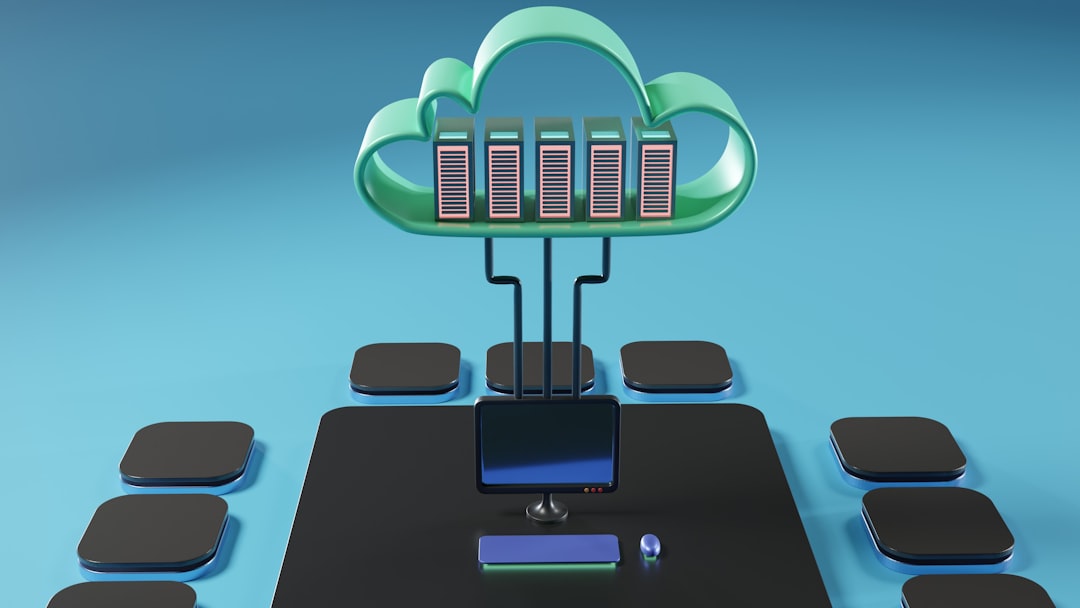
Enterprise storage is entering a new era in 2026. Artificial intelligence, edge computing, hybrid cloud, ransomware defense, and real-time analytics are pushing organizations to rethink how they store, protect, move, and monetize data. The best enterprise data storage solutions are no longer just about capacity; they combine performance, automation, cyber resilience, sustainability, and flexible consumption models into platforms that can support both today’s workloads and tomorrow’s unknown demands.
TLDR: The best enterprise data storage solutions for 2026 are hybrid, intelligent, secure, and built for AI-scale data growth. Leading options include all-flash arrays, software-defined storage, object storage, cloud-native platforms, hyperconverged infrastructure, and backup-focused cyber resilience systems. Enterprises should prioritize performance, scalability, ransomware recovery, automation, multi-cloud support, and predictable cost models when choosing a solution.
What Makes Enterprise Storage Different in 2026?
In the past, storage buying decisions were often based on three questions: How much capacity do we need? How fast does it need to be? and How much will it cost? In 2026, those questions still matter, but they are only the beginning. Modern enterprise storage must support complex data environments that include private data centers, public cloud platforms, edge locations, AI pipelines, Kubernetes clusters, compliance archives, and disaster recovery sites.
Organizations are also managing more unstructured data than ever before: video, sensor logs, medical images, machine learning datasets, customer interactions, financial records, and operational telemetry. This has made scalability and data intelligence just as important as raw performance.
Another major shift is security. Ransomware attacks increasingly target backup repositories and storage infrastructure directly. As a result, 2026-ready solutions must include immutable snapshots, air-gapped recovery options, anomaly detection, encryption, role-based access control, and fast restore capabilities.

Key Features to Look For
Before choosing a platform, enterprises should evaluate storage solutions based on business outcomes rather than technical specifications alone. The right solution should help teams reduce downtime, simplify operations, lower long-term costs, and unlock more value from data.
- Performance: Look for NVMe, NVMe over Fabrics, and low-latency architecture for mission-critical workloads.
- Scalability: Choose platforms that can scale capacity and performance independently as data grows.
- Hybrid cloud support: The best systems allow seamless integration with AWS, Microsoft Azure, Google Cloud, and private clouds.
- Cyber resilience: Immutable backups, instant recovery, encryption, and ransomware detection are now essential.
- Automation: AI-driven monitoring, self-healing capabilities, and policy-based management reduce administrative burden.
- Data services: Compression, deduplication, replication, tiering, and snapshot management improve efficiency.
- Flexible pricing: Consumption-based models, storage as a service, and pay-as-you-grow options help control budgets.
1. All-Flash Storage Arrays
All-flash arrays remain one of the best choices for enterprises that need consistently high performance. They are ideal for databases, virtual desktop infrastructure, ERP systems, CRM platforms, financial transactions, and latency-sensitive analytics. In 2026, the leading all-flash systems use NVMe and increasingly support NVMe over TCP or NVMe over Fibre Channel to deliver extremely low latency across modern networks.
Top enterprise vendors in this category often include Dell Technologies, NetApp, Pure Storage, HPE, IBM, Hitachi Vantara, and Lenovo. These platforms typically offer advanced data reduction, replication, automated workload placement, and cloud integrations. Many also include AI-based predictive support, allowing IT teams to detect potential issues before they become outages.
Best for: Enterprises running large databases, high-volume transactions, analytics platforms, virtualization, and mission-critical applications.
Potential drawback: All-flash systems can still be more expensive than hybrid or object-based approaches, especially for massive cold data archives.
2. Hybrid Flash and Disk Storage
Not every workload needs ultra-low latency. Hybrid arrays combine flash performance with traditional hard disk capacity, giving enterprises an effective balance of speed and cost. In 2026, hybrid storage remains valuable for organizations with mixed workloads, large file shares, backup staging, content repositories, and secondary data stores.
Modern hybrid platforms use intelligent tiering to place hot data on flash and colder data on high-capacity disks. This helps businesses avoid overpaying for premium storage when only a fraction of their data requires high performance. Hybrid arrays can also serve as a practical bridge for companies modernizing gradually rather than replacing their entire storage estate at once.
Best for: Mid-sized and large organizations that need reliable capacity at a reasonable cost while still supporting some performance-sensitive applications.
3. Software-Defined Storage
Software-defined storage, often called SDS, separates storage services from proprietary hardware. Instead of relying on a single vendor’s appliance, SDS lets businesses pool storage resources across commodity servers, cloud infrastructure, or existing hardware. This approach is especially appealing for enterprises that want flexibility, control, and cost optimization.
Solutions from VMware, Red Hat, Microsoft, IBM, DataCore, and open-source ecosystems can help organizations build scalable storage environments tailored to specific needs. SDS is also useful for organizations standardizing around Kubernetes and containerized applications because it can support persistent storage across dynamic environments.
The main advantage is agility. Enterprises can expand capacity by adding nodes and can often avoid vendor lock-in. However, SDS requires strong architectural planning and skilled administrators. When implemented poorly, it can create complexity instead of reducing it.
Best for: Enterprises with strong IT teams, private cloud strategies, container platforms, and a desire for hardware flexibility.

4. Object Storage for Massive Unstructured Data
Object storage is one of the most important enterprise storage categories for 2026. It is designed for huge volumes of unstructured data and is commonly used for AI training datasets, media files, backups, archives, big data analytics, data lakes, and cloud-native applications. Unlike block or file storage, object storage uses metadata-rich objects stored in flat namespaces, making it highly scalable and efficient.
Enterprise object storage platforms may be deployed on premises, in the cloud, or across hybrid environments. Popular options include AWS S3, Azure Blob Storage, Google Cloud Storage, Cloudian, MinIO, Dell ECS, NetApp StorageGRID, IBM Cloud Object Storage, and Scality.
One reason object storage is so powerful is its compatibility with the S3 API, which has become a de facto standard for cloud-native data access. This allows enterprises to build applications that can move more easily between environments. It also enables long-term retention and compliance use cases with features such as lifecycle policies, object lock, versioning, and geo-replication.
Best for: AI datasets, data lakes, backup repositories, media archives, compliance retention, and cloud-native applications.
5. Cloud Storage Platforms
Cloud storage continues to be a cornerstone of enterprise IT strategy. By 2026, most large organizations will not use one cloud; they will use several. AWS, Microsoft Azure, and Google Cloud all offer mature storage services spanning object storage, block storage, file storage, archival tiers, and high-performance options.
Cloud storage is attractive because it offers rapid provisioning, global availability, managed durability, and integration with analytics, AI, and application development services. Businesses can store data close to cloud workloads and use automated lifecycle policies to move infrequently accessed data into cheaper tiers.
However, cloud storage also requires careful governance. Data egress fees, compliance requirements, access control, and uncontrolled growth can create cost and risk challenges. The best enterprise cloud storage strategies include FinOps practices, automated tagging, encryption, policy-based retention, and regular cost reviews.
Best for: Digital transformation, cloud-native applications, global teams, disaster recovery, analytics, and elastic workloads.
6. Hyperconverged Infrastructure
Hyperconverged infrastructure, or HCI, combines compute, storage, networking, and virtualization into a unified platform. It simplifies deployment and management by allowing enterprises to scale in building blocks. HCI is often used in branch offices, virtual desktop environments, private clouds, and organizations that want a more streamlined alternative to traditional three-tier infrastructure.
Leading HCI options include Nutanix, VMware vSAN-based systems, HPE SimpliVity, Dell VxRail, Lenovo ThinkAgile, and Cisco HyperFlex alternatives or related architectures. In 2026, HCI platforms are increasingly focused on hybrid cloud integration, Kubernetes support, edge deployments, and simplified lifecycle management.
Best for: Virtualization, private cloud, distributed offices, edge locations, and simplified infrastructure operations.
Potential drawback: Scaling compute and storage independently can be less flexible than with disaggregated architectures, although newer HCI models are improving in this area.
7. Backup, Recovery, and Cyber Resilience Storage
No enterprise storage strategy is complete without a dedicated focus on recovery. In 2026, backup storage is not just an insurance policy; it is a critical layer of cyber defense. Attackers frequently attempt to delete or encrypt backups before launching ransomware demands, so enterprises need storage that can resist tampering and enable rapid restoration.
Solutions from Veeam, Commvault, Rubrik, Cohesity, Dell, Veritas, IBM, and Acronis are commonly used to protect enterprise data. The strongest platforms include immutable backup repositories, clean-room recovery, malware scanning, identity-based access controls, and orchestration for disaster recovery testing.
Best for: Ransomware recovery, compliance, disaster recovery, business continuity, and protection of hybrid workloads.
Top Evaluation Criteria for 2026
When comparing enterprise storage vendors, decision-makers should look beyond benchmark numbers. A solution that performs well in a lab may not be the best choice for a complex, regulated, multi-cloud enterprise environment.
- Workload fit: Match the storage type to the application. Databases, archives, AI models, and backups have very different requirements.
- Operational simplicity: Favor platforms with strong automation, centralized dashboards, and proactive support.
- Security architecture: Verify encryption, immutability, access controls, audit logging, and recovery workflows.
- Cloud portability: Ensure the platform supports hybrid and multi-cloud movement without excessive complexity.
- Total cost of ownership: Include hardware, software, support, power, cooling, staff time, migration costs, and cloud fees.
- Vendor ecosystem: Consider integrations with VMware, Kubernetes, major databases, backup tools, AI platforms, and security systems.
Emerging Trends Shaping Enterprise Storage
Several trends will influence enterprise storage decisions throughout 2026. The first is the rise of AI-ready storage. Training and running AI models requires huge datasets, high throughput, and fast access to unstructured data. Storage platforms that can feed GPUs efficiently will become more valuable.
The second trend is energy efficiency. As data volumes grow, power and cooling costs are becoming board-level concerns. Vendors are responding with denser flash systems, smarter tiering, and sustainability reporting tools.
The third trend is autonomous operations. AI-assisted storage management can predict capacity issues, recommend performance tuning, detect abnormal behavior, and automate routine tasks. This is especially useful as IT teams manage more infrastructure with fewer specialists.
Finally, data sovereignty is becoming more important. Enterprises operating globally must know exactly where data resides, who can access it, and how it is protected under regional regulations.
Which Solution Is Best?
There is no single “best” enterprise storage solution for every organization in 2026. A global bank may need high-performance all-flash arrays, strict replication, and immutable backup storage. A media company may prioritize object storage for petabytes of video content. A healthcare provider may need hybrid cloud storage with compliance controls, fast imaging access, and long-term archival retention. A retailer may choose HCI for distributed stores and cloud storage for analytics.
For most enterprises, the best approach will be a tiered storage strategy. Use all-flash storage for critical applications, object storage for unstructured data and archives, cloud storage for elasticity and global reach, and cyber-resilient backup storage for recovery. Software-defined storage and HCI can then provide flexibility where standardization and simplified management are priorities.
Final Thoughts
The best enterprise data storage solutions for 2026 are not defined by capacity alone. They are defined by how well they help organizations move faster, stay secure, recover from disruption, meet compliance obligations, and turn data into business value. As data becomes more central to every industry, storage will remain one of the most strategic infrastructure decisions an enterprise can make.
Organizations that invest in flexible, secure, AI-ready, and cloud-connected storage architectures will be better prepared for the next wave of digital transformation. The smartest choice is not necessarily the newest or most expensive platform; it is the one that aligns storage technology with business goals, operational realities, and future growth.